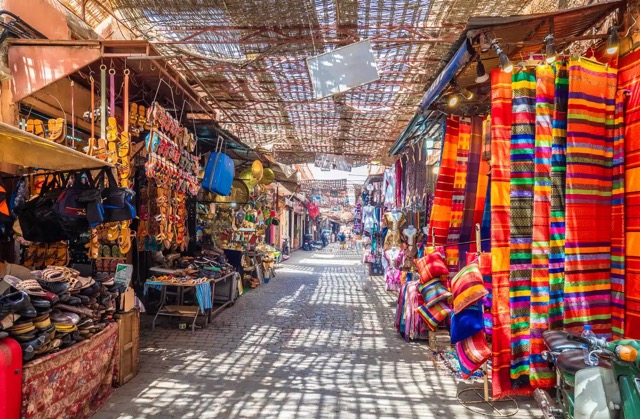
1. A Living History in the Medina
- Ancient trade hub: Marrakesh’s souks developed along caravan trade routes, forming specialized districts—dyers, blacksmiths, leatherworkers—organized by craft and guild.
- Modern heart: Today, within the walled Medina, bustling thoroughfares like Souk Semmarine—known as the “Market of the Farriers”—connect iconic Jemaa el-Fna square to smaller alleys.
2. Central Nodes & Specialty Markets
- Jemaa el-Fna: By day a maze of juice stalls and snake charmers, by night a fiery stage for storytellers, musicians, and food vendors. It’s a UNESCO‑recognized cultural space.
- Souk Semmarine: A sprawling, covered marketplace offering textiles, lanterns, tagines, jewellery, and spices—visitors often “lose track of an entire day” exploring it.
- Specialty souks:
- Souk el‑Attarine: aromatic spices, perfumes, argan oil .
- Souk Cherratin: leather goods like babouches, bags, and wallets .
- Souk Haddadine: metalwork and blacksmith crafts—lamp chandeliers, grilles, home decor—echoing with the clang of the forge.
3. A Feast for the Senses
- Craftsmanship: Within the medina’s alleys, workshops produce goods as they sell: you’ll see woodcarvers, dyers, tanners, and metalworkers practicing age-old trades.
- Culinary tapestry: Markets overflow with spices like saffron and ras el hanout, fresh olives, tagines, harira soup, and street food delicacies like snail soup—turning the souks into edible galleries.
4. Tips for Visiting
- Bargaining is essential: Vendors often double their initial price; start by offering a third, and negotiate with good-natured patience.
- Browse first: Don’t ask “How much?” unless ready to buy. Walk with caution and keep valuables safe.
- Timing matters: Souks are busiest and cooler from morning until evening (9 am–9 pm), while sunset in Jemaa el-Fna offers the most enchanting transformation.
Marrakesh’s markets aren’t just places to shop—they’re vibrant living archives of Moroccan culture:
- They connect generations of artisans, from metal and leather to spices and textiles.
- They reflect the city’s soul, where merchants, storytellers, acrobats, and food vendors create a sensory spectacle .
- They offer a window into local life: a blend of tradition and daily commerce that has persevered for centuries .